One litre of heating oil can make a million litres of groundwater unfit to drink. That’s the number environmental officials use, and it’s the reason a drip the size of a loonie under your tank deserves your full attention today, not next weekend.
If you’ve just spotted oil under your tank and you’re searching “leaking oil tank what to do” with your phone in one hand and a paper towel in the other, take a breath. Most leaks we see in Greater Moncton are caught early, cleaned up for a manageable cost, and solved with a straightforward tank replacement. The homeowners who end up with five-figure remediation bills are almost always the ones who waited.
Here’s exactly what to do in the first hour, in order, plus the mistakes that turn a small problem into a big one.
If oil is actively dripping or you can smell it strongly right now, call our 24/7 emergency line at (506) 806-0900. We answer around the clock for leaking-tank emergencies across Moncton, Dieppe, Riverview, and Southeast New Brunswick.
First, Make Sure It’s Actually a Leak
Not every wet spot is a disaster. Indoor tanks in damp basements often sweat in summer, and that condensation can drip off the bottom of the tank and look alarming.
Here’s the quick test. Wipe the spot with a clean paper towel and smell it. Heating oil has a sharp diesel-like odour you won’t mistake for water, and it leaves a yellowish stain on the towel. Condensation smells like nothing and dries clean.
Also look at where the moisture is coming from. Condensation forms all over the tank’s cold surface. A leak comes from a specific point: a rusted seam, the bottom of the tank, the filter, a fitting, or the oil line. If you see a rainbow sheen on the moisture, that’s oil.
Still not sure? We wrote a whole guide on what a wet spot under your oil tank means. When in doubt, treat it as a leak until a professional tells you otherwise.
What to Do When Your Oil Tank Is Leaking: The First 5 Steps
Do these in order. None of them require special skills or tools, and together they can save you tens of thousands of dollars.
Step 1: Slow or stop the flow, if you can do it safely
Put a bucket, roasting pan, or any container under the drip right away. If the leak is coming from the filter, the fuel line, or a fitting rather than the tank body, close the shut-off valve at the bottom of the tank. It’s usually a small wheel or lever where the line leaves the tank, and turning it clockwise stops oil from feeding the leak.
While you’re at it, shut the furnace off at the emergency switch. You don’t want the burner pulling fuel through a compromised line while you deal with the tank.
If the tank body itself is weeping through rust, don’t try to move the tank, tip it, or tighten anything on it. A corroded steel tank can let go completely if you disturb it, and 900 litres of oil on your basement floor is a catastrophe. Catch the drip, close the valve if you safely can, and leave the rest to a licensed technician.
Step 2: Contain what’s already out
Grab whatever absorbent you have: kitty litter, floor-dry, sawdust, even old towels you’re willing to sacrifice. Ring the spill so it can’t spread, especially toward floor drains, sump pits, or cracks in the slab. Oil that reaches a drain or sump can end up in the ground or the municipal system, and that changes the whole situation.
Open basement windows if you have them and keep kids and pets out of the area. Heating oil isn’t explosive at room temperature the way gasoline is, but the fumes cause headaches and nausea, and nobody should breathe them longer than necessary. Don’t smoke or run anything with an open flame near the spill, and skip the scented candles too. The smell is information, and masking it just hides whether your cleanup is working.
Keep the soaked absorbent in a plastic-lined pail or bin. It counts as contaminated material and shouldn’t just go in your regular garbage.
Step 3: Report the spill
In New Brunswick, petroleum spills must be reported. The 24 hour environmental emergencies line for the Maritimes is 1-800-565-1633, and it connects you with the people who notify the province’s Department of Environment and Local Government. The call is free, it takes a few minutes, and it protects you.
Homeowners sometimes hesitate here because they’re afraid reporting will get them in trouble. It’s the opposite. A documented, promptly reported spill with a proper cleanup is exactly what your insurance company and any future home buyer want to see. An unreported spill that surfaces later, during a home sale or a neighbour’s well test, is where the real trouble lives.
For small indoor drips fully caught on concrete, the response is usually simple guidance over the phone. For anything that touched soil, a drain, a well, or a ditch, reporting is essential and follow-up is likely. Environment and Climate Change Canada’s Environmental Emergencies Program explains how spill response works across the country, but for a home tank leak, that one phone number covers you.
Step 4: Call your insurance company and start documenting
Before anyone cleans anything beyond emergency containment, take photos and video. Get the tank from several angles, the leak point, the spread of the oil, the tank’s nameplate or serial number, and the room around it. Note the date and time you found the leak, and dig out your recent oil delivery receipts, since they help establish how much oil was in the tank.
Then call your home insurer’s claims line and get a claim number the same day. Coverage for oil leaks in New Brunswick varies a lot between policies, and many insurers apply age limits to tanks, so don’t assume you’re covered or assume you’re not. We break down the fine print in our guide to whether insurance covers oil tank leaks.
One more thing: don’t let anyone haul the old tank away for scrap until your insurer confirms they don’t need to see it. Adjusters deny claims over missing evidence more often than you’d think.
Step 5: Get a licensed professional out the same day
A leaking tank doesn’t get better. Steel doesn’t heal, and the pinhole that’s dripping today is the thin edge of a tank floor that’s been corroding from the inside for years. You need someone licensed to pump out the remaining oil, remove the tank safely, and get a new one in before the next cold snap.
The same-day part matters. Oil keeps moving while you wait. It soaks deeper into concrete, finds cracks, and travels along footings. Our emergency oil tank service in Moncton exists for exactly this situation: we pump down the tank, stabilize the leak, and hand you a free written estimate for replacement on the spot.
Found a leak after hours? That’s what the emergency line is for. Call (506) 806-0900 any time, day or night.
What Not to Do With a Leaking Oil Tank
The wrong moves in the first day often cost more than the leak itself. Here’s what we see go wrong in Greater Moncton basements and yards.
Don’t hose it down. Water spreads oil, it doesn’t dilute it. Hosing an outdoor spill pushes oil deeper into the soil and toward storm drains. Hosing an indoor spill sends oil to the floor drain, and now you’ve got a much bigger reporting situation.
Don’t trust a DIY patch. Epoxy sticks, fibreglass wrap, even the old bar-of-soap trick might slow a pinhole for a day. They do nothing about the corrosion eating the rest of the tank floor, and a patched tank will fail again, usually worse, usually in February.
Don’t keep running the furnace off a tank that’s leaking from the bottom or a seam. Sludge and water stirred up near a failing tank floor can foul your filter and nozzle, and you want the remaining oil pumped out cleanly, not burned down over an active leak.
Don’t wait for spring. We hear this one every fall. The tank has already told you it’s done. Winter is when tanks fail hard, when the ground is frozen, and when emergency work costs the most.
Don’t throw soaked absorbent in the garbage. Contaminated material has to be disposed of properly. Your contractor handles this, which is one more reason to get one involved early.
What a Leaking Oil Tank Costs: Catching It Early vs. Letting It Soak
The difference between a Tuesday phone call and a month of hoping is bigger than most people expect. These are typical ranges we see in the Greater Moncton area.
| Situation | Typical cost in Southeast NB (CAD) |
|---|---|
| Weeping tank caught early, pumped out and replaced | $3,500 to $6,400 |
| Small indoor spill on bare concrete, contained same day | $5,000 to $15,000 |
| Oil soaked into soil beside or under the foundation | $25,000 to $100,000+ |
| Oil reaches a well, ditch, or watercourse | $100,000+, with provincial oversight |
Three quick stories from our service area show how that table plays out in real life.
Denise in Riverview noticed a shiny streak down the back of her 18-year-old tank on a Sunday and called Monday morning. We transferred the remaining 400 litres into her new tank, hauled the old one away, and she paid $3,400 all in. Total oil lost: maybe two cups, all of it caught in a baking pan.
The Comeaus in Shediac weren’t as lucky, through no real fault of their own. Their outdoor tank had a slow leak at a rusted weld seam, hidden behind the snowbank the plow builds every winter. By April, oil had been soaking into the ground for months, and the remediation ran to $27,000 before landscaping. Salt air is hard on outdoor tanks near the strait, and it’s a big part of why cleanup bills climb so fast, something we cover in detail in our post on oil spill cleanup costs.
And Gilles in Memramcook is the call we wish every call could be. He smelled oil, found a loose filter fitting dripping into his crawlspace gravel, closed the tank valve, and called us that afternoon. A service visit, a new filter assembly, and a bag of absorbent came to about $340. The difference between his bill and the Comeaus’ bill wasn’t luck. It was hours instead of months.
Who to Call in Greater Moncton, and What Happens Next
Once the emergency is stabilized, the fix is usually simpler than people fear. Here’s how it goes with us.
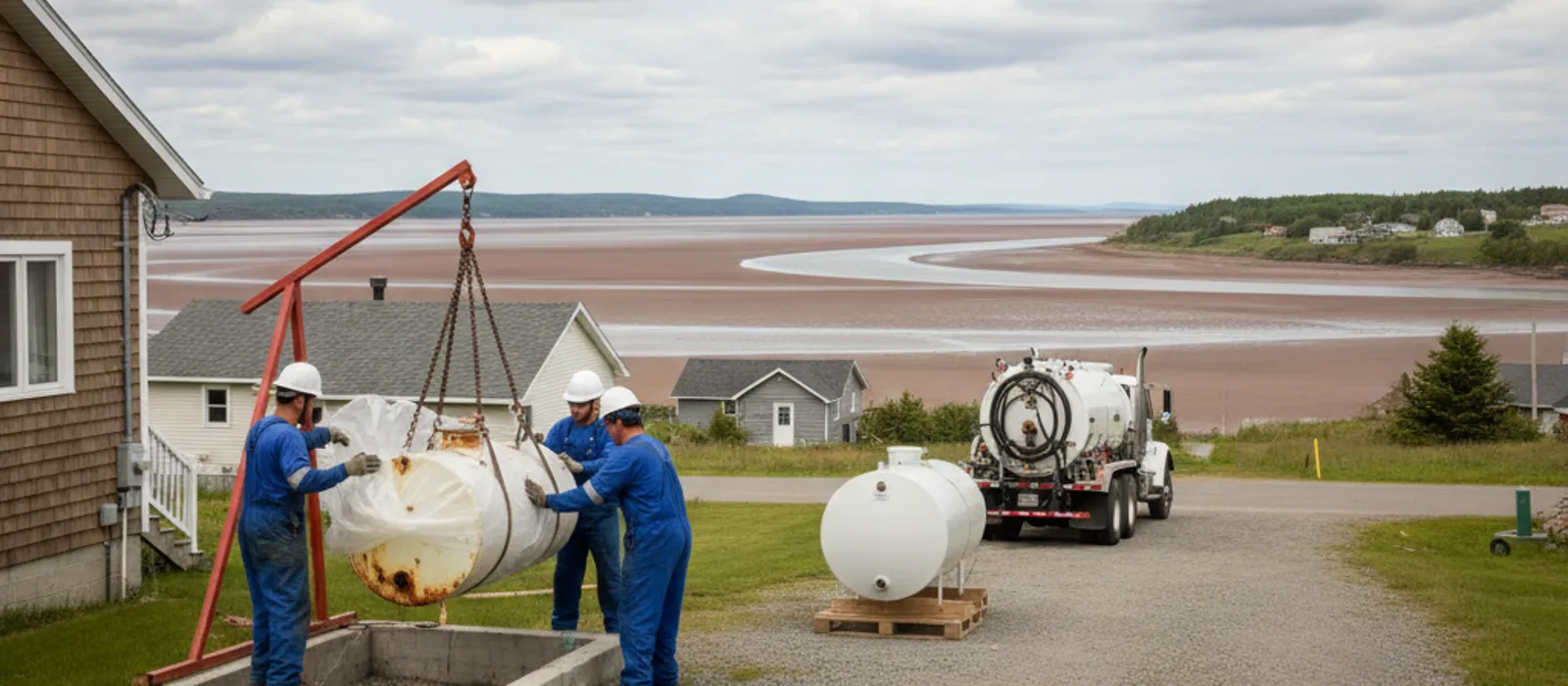
First, we confirm where the leak is coming from and pump out whatever oil the tank still holds. Your oil isn’t wasted; it goes into the new tank. Then we remove the old tank and dispose of it properly, with the paperwork to prove it, since your insurer and any future buyer may ask.
Next comes the new tank, installed to code on a proper base, with new fittings, filter, and gauge. Most residential swaps in Moncton, Dieppe, and Riverview are done in a single day, and you have heat again that night. You can see the full process, and current pricing, on our oil tank replacement in Moncton page.
Finally, if oil got into concrete or soil, we’ll tell you straight what needs professional remediation and help you coordinate with your insurer and the province. No scare tactics, just a clear written scope so you know what’s necessary and what isn’t.
Every estimate is free, written, and honoured. We’re licensed and insured, and we work across Westmorland, Albert, and Kent counties, from Sackville to Salisbury to Shediac and everywhere between.
Ready for a straight answer about your tank? Request your free written estimate or call (506) 806-0900. If it’s leaking right now, say so, and we’ll treat it as the emergency it is.
Frequently Asked Questions
Do I have to report a small oil leak in New Brunswick?
The safe assumption is yes. Call the 24 hour Maritimes environmental emergencies line at 1-800-565-1633 and describe what happened. For a few cups fully caught on concrete, the response is usually simple advice, while anything that reached soil, a drain, or water gets follow-up. Reporting protects you with your insurer and in any future sale of the house.
Will my insurance cover a leaking oil tank?
It depends on your policy, and the differences between insurers are big. Many policies cover sudden accidental spills but exclude gradual leaks from corrosion, and most insurers apply age limits, often around 15 to 20 years. Call your insurer’s claims line the same day you find the leak and document everything with photos before cleanup. The paper trail is often the difference between a covered claim and a fight.
Can a leaking oil tank be repaired instead of replaced?
If the leak is at the filter, a fitting, or the oil line, yes, that’s a repair, and it’s often a few hundred dollars. If the tank body itself is leaking, replacement is the only safe answer. Steel tanks corrode from the inside out, so a pinhole means the metal around it is thin too, and any patch is temporary at best.
How fast can you replace a leaking tank in Moncton?
For active leaks, we run a 24/7 emergency line and can usually pump down and stabilize a tank the same day, anywhere in Greater Moncton. Full replacement typically happens within a day or two, depending on tank stock and site access. Most homeowners have the new tank installed and the heat back on the same day the old tank comes out.