If you smell oil or see a wet spot under your tank, call (506) 806-0900 right now. We answer around the clock across Greater Moncton and we'll talk you through what to do before we even arrive.
A leaking oil tank in Moncton is not a wait-until-Monday problem. Heating oil moves fast once it gets loose, and a slow drip that soaks into a basement floor or the soil beside your foundation gets more expensive by the hour. That's why Hub City Tank Co runs a 24/7 emergency line for leaking tanks across Moncton, Dieppe, Riverview, and the rest of Southeast New Brunswick.
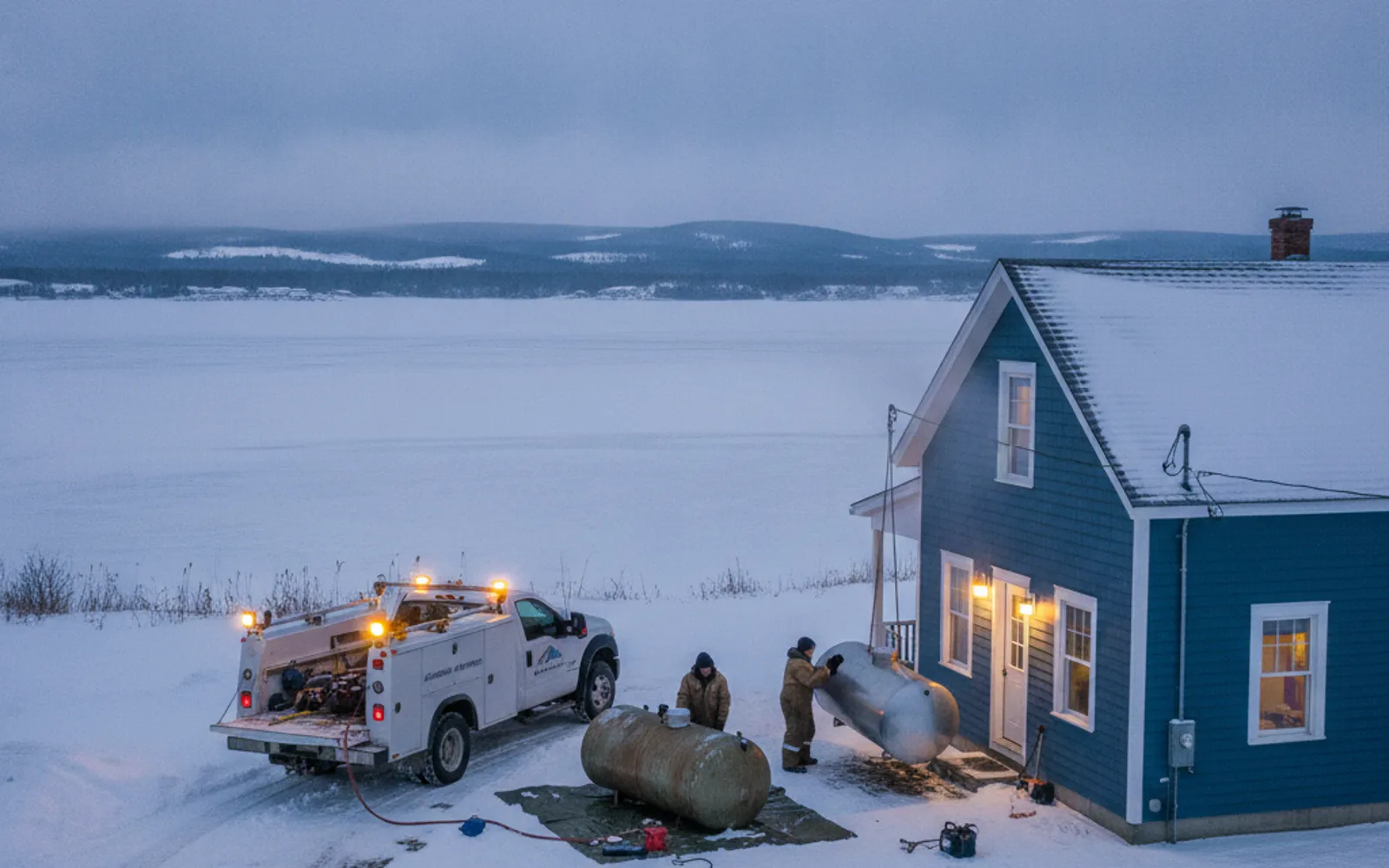
When you call, we'll help you figure out whether you're looking at a loose fitting, a weeping filter, or a tank that's actively failing. Then we get to your home, contain the leak, and pump out the remaining oil if the tank can't be trusted. If the tank is done, we can usually have a new tank installed within a day or two, so you're not left without heat.
A real person answers (506) 806-0900 day or night, including weekends and holidays. Leaking tanks don't keep business hours, so neither does our emergency line.
We'll tell you what to check and what to do before we arrive. Often we can tell over the phone whether it's the tank, the filter, or just condensation.
We arrive with drip trays, absorbent pads, and containment materials to stop oil from spreading. The sooner it's contained, the smaller the cleanup bill.
If your tank is failing, we transfer the remaining oil into safe temporary storage. You don't lose the fuel you've already paid for.
We photograph the tank, document the damage, and give you a written report you can hand to your insurer. It takes one stressful job off your plate.
Most emergency replacements are installed within a day or two, and no-heat households go to the front of the line. Every job starts with a free written estimate.
Not every oil smell means your tank is failing. A single litre of spilled oil can make a whole basement smell for days, and many so-called tank leaks turn out to be a weeping filter canister or a loose fitting. Take five minutes with a flashlight and check the bottom of the tank, the seams, the filter, and the fuel line. A fresh wet spot under the tank, a shiny streak down the tank's belly, or an odour that keeps getting stronger are the signs the steel itself may be going.
While you wait for help, here's what you can safely do:
Then call (506) 806-0900. We'll ask a few quick questions about what you're seeing and smelling, tell you whether it's an emergency or something that can wait for a scheduled visit, and get moving either way.
Our first job on site is to stop the spread. We close the tank valve, set containment under the leak, and lay absorbent material over any oil that's already escaped. Then we check whether the leak is coming from a fitting, the fuel line, or the tank shell itself. A fitting or line leak can often be repaired on the spot. A leaking shell can't, because the corrosion that made one hole is already working on the next one.
If the tank is failing, we pump the remaining oil into sealed storage so the tank can't dump its contents on your floor overnight. A standard 910 litre residential tank can hold over $1,000 worth of oil, so we save every litre we can. From there you get a written plan with real numbers: what containment and pump-out cost today, and what removing the old tank and installing a new one will cost this week.
One thing we want to be straight about: we contain leaks and handle tanks, but a spill that has soaked into soil or groundwater needs an environmental cleanup contractor. If your situation crosses that line, we'll tell you right away and help you get the right people involved, including for buried tanks where leaks can go unnoticed for years.
A leak comes with a bit of paperwork, and doing it in the right order protects you. Here's the sequence we walk homeowners through on almost every emergency call.
The reason insurers push so hard on old tanks is simple: a cleanup that reaches soil or groundwater can run from $10,000 to well over $100,000. Reporting quickly and containing fast is how you stay on the cheap side of that range. And if your insurer sent you one of those letters demanding the tank be replaced by a deadline, we handle those every week and can get you compliant fast.
This one catches a lot of Moncton homeowners off guard. The delivery driver shows up, takes one look at a rusted tank or an expired date sticker, and refuses to fill it. They're not being difficult, they're simply not allowed to fill a tank that looks unsafe, and honestly you don't want them to. But that doesn't help you when it's minus 20 and the gauge is sitting near empty.
Call us and tell us you've been refused a fill. No-heat households go to the front of our schedule, and most refused-fill replacements are installed within 24 to 48 hours. We install new tanks that meet current code, transfer any usable oil from your old tank, and leave you with the paperwork your fuel company and insurer need to see. Once the new tank is in, deliveries restart like nothing happened.
If your tank hasn't been refused yet but it's past 15 years old or showing rust at the seams and legs, don't wait for the driver to make the call for you. A planned tank replacement in October is calmer and often cheaper than an emergency one in January. You can see typical pricing on our oil tank replacement cost page, and we cover the whole region, from Shediac and Salisbury to Memramcook and Sackville.
For active leaks in Moncton, Dieppe, and Riverview we aim to be on site within 2 hours, day or night. Calls from Shediac, Salisbury, Memramcook, and Sackville are usually same day. The emergency line at (506) 806-0900 is answered 24/7, and we start phone triage the moment you call.
A typical emergency visit with containment and fuel pump-out runs $350 to $700, depending on how much oil we move and how long it takes. If the tank needs replacing, a new one installed usually runs $3,000 to $5,500, and we credit the emergency visit toward the replacement. You'll get a free written estimate before any replacement work starts.
If oil has reached soil, a floor drain, or water, yes. Report it to the 24-hour environmental emergency line for the Maritimes at 1-800-565-1633. A small drip fully caught in a tray on sealed concrete is a different situation, but it's still worth documenting with photos and a written report, which we prepare during our visit. Prompt reporting almost always works in the homeowner's favour.
It depends on your policy and the tank's age. Many New Brunswick policies cover sudden and accidental spills, but a cleanup that reaches soil can exceed $50,000, so insurers look hard at tanks older than about 15 years. Notify your insurer within 24 to 48 hours, take photos, and keep receipts. We provide a written report that supports your claim.
Usually within 24 to 48 hours of your call, and faster in a winter no-heat situation. Most fuel companies in the Moncton area won't fill single-wall steel tanks past about 15 years, or any tank with visible rust or a missing date tag. A standard install with a new 910 litre tank takes about 3 to 4 hours on site, and your new tank comes with the documentation the driver needs, so deliveries restart right away.
Free written estimates. Emergency calls answered around the clock.